Updated: July 2026
Is It Safe to Travel to Moyo Island, Sumbawa?
Yes, Moyo Island is an exceptionally safe destination for discerning travelers. Its security is a direct result of its geographical remoteness, extremely low population density, and an infrastructure built around exclusive, eco-conscious tourism. This creates a tranquil and well-managed environment, far from the typical concerns of more mainstream travel spots.
- Minimal Crime: The island’s small, interconnected village communities mean that crime is virtually nonexistent.
- Controlled Access: As a protected nature reserve, Moyo avoids mass tourism, ensuring visitor presence is managed and unobtrusive.
- High-Standard Services: Luxury operators provide a secure bubble with private transport, expert guides, and robust health and safety protocols.
The air hangs thick and still, punctuated only by the rhythmic drone of a cicada and the distant crash of water over limestone. Underfoot, the damp earth of the trail releases a petrichor scent, mingling with the sweet perfume of unseen frangipani blossoms. Here, deep within the forest of Moyo Island, the world shrinks to the immediate senses. There is no traffic, no solicitations, no ambient anxiety of a crowded city. This profound sense of peace is the first and most potent answer to the question of safety. It’s an environment where the primary concerns are not of personal security, but of whether you’ll spot the rare yellow-headed parrot or the endemic Moyo hornbill. For years, I’ve fielded questions from our readers about emerging destinations, and the query “Is it safe?” always precedes “What should I do?” For Moyo, the two are intertwined. Its safety is not a footnote; it is the very essence of its allure, a sanctuary engineered by nature and preserved by a commitment to true luxury—the luxury of solitude and security.
Demystifying Remoteness: Geography as a Security Feature
In the lexicon of modern travel, “remote” can be a double-edged sword, suggesting both idyllic escape and potential peril. On Moyo Island, however, remoteness is the foundational pillar of its safety. Located in the Flores Sea, just north of the larger island of Sumbawa in Indonesia’s West Nusa Tenggara province, Moyo is a world apart. Spanning a mere 349 square kilometers, its population hovers around just 1,000 inhabitants, primarily concentrated in six small fishing villages. This equates to a population density of less than three people per square kilometer, a statistic that immediately separates it from the bustling thoroughfares of Bali or even nearby Lombok. This isolation is not an accident but a matter of geography and deliberate preservation. Access itself is a natural filter. The journey typically involves a flight to Sultan Muhammad Kaharuddin III Airport (SWQ) in Sumbawa Besar, followed by a private speed boat transfer, a trip that takes between one and two hours across the Saleh Bay. For the ultimate in seamless travel, a handful of operators, including the pioneering Amanwana resort, arrange private seaplane charters directly to the island’s coast. This controlled, multi-step access ensures that every visitor is accounted for and has a specific purpose for being there, effectively eliminating the transient element that can lead to opportunistic crime in more accessible locales. The island’s status as a nature reserve, officially designated as Moyo Island Hunting Park in 1976, further insulates it, placing the majority of its land under government protection and strictly limiting development. This isn’t just a place you stumble upon; it’s a destination you intentionally seek out, and that intentionality is the first layer of its secure embrace.
An Island Apart: The Near Absence of Crime
When travelers ask about safety, they are typically referring to crime against persons or property. On this front, Moyo Island is an anomaly in the most reassuring way. Petty theft, scams, and harassment—unfortunate realities in many global tourism hotspots—are fundamentally absent from the local culture and environment. I spoke with Iwan, a guide who has been leading treks to the island’s famed waterfalls for over a decade, and his perspective was telling. “Here, our reputation is our livelihood,” he explained over sweet Sumbawan coffee. “A single bad story would travel through our small villages in an hour. We are a community of families, fishermen, and farmers. We protect our guests because they are vital to our future, and more importantly, because it is our way.” This sentiment is echoed across the island. The social fabric of villages like Labuan Aji is incredibly tight-knit. The local economy is sustained by a stable combination of traditional fishing, seaweed farming, and the high-value, low-volume tourism sector. This economic stability removes the desperation that often fuels petty crime. Unlike destinations that have been overwhelmed by rapid, unplanned tourism development, Moyo’s growth has been slow, deliberate, and largely driven by a single, high-end anchor property for decades. This has fostered a symbiotic relationship between the local community and the tourism operators, built on mutual respect and shared benefit. When you arrange a private tour of moyo sumbawa, you are not just a client; you are a guest of the entire island community, and the hospitality and security that affords is absolute.
Health, Nature, and Tropics
While human-related risks are negligible, a comprehensive look at safety must include health and natural hazards. As with any destination in this part of the world, it’s wise to be prepared. Mosquito-borne illnesses like dengue are endemic to the region, but the risk on Moyo, particularly within the well-maintained grounds of a luxury property, is very low. Standard precautions—using a quality DEET-based repellent, especially at dawn and dusk, and wearing long sleeves—are more than sufficient. Medical infrastructure on the island is basic, limited to small community health clinics (Puskesmas). This is a critical point for travelers to understand. For any serious medical issue, the protocol for any reputable operator is immediate evacuation by boat or helicopter to a modern hospital in Sumbawa Besar, Bali, or even Singapore. This is a standard contingency for which high-end tour providers are fully prepared. Food and water safety within the established resorts and private tours are impeccable, adhering to the highest international standards, with bottled water used for all consumption. The other significant consideration is Indonesia’s location on the Pacific Ring of Fire. Earthquakes are a fact of life. While the 2018 Lombok earthquake was felt in the region, modern luxury constructions are built to seismic-resistant standards, and staff are rigorously trained in emergency procedures. When exploring the island’s wild interior, the primary “dangers” are the terrain and wildlife. Saltwater crocodiles exist in some remote mangrove estuaries, far from tourist paths. The island’s forests are home to various snakes, but they are shy and rarely encountered. The key is simple and non-negotiable: never trek without an experienced local guide. They are your key to both safety and a deeper understanding of the ecosystem.
The ‘Aman’ Effect: How Eco-Luxury Cultivates Security
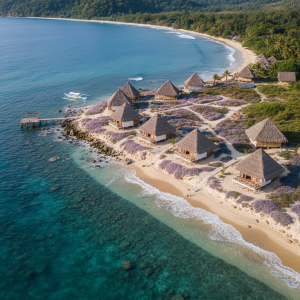
One cannot discuss the secure, exclusive nature of Moyo Island without acknowledging the profound influence of Amanwana. Opened in 1993, this ultra-luxury tented camp was more than just a hotel; it was a statement. It established Moyo on the global map for a very specific type of traveler—one seeking privacy, nature, and discreet, flawless service. This “Aman effect” has shaped the island’s entire tourism ecosystem. It set a precedent for low-impact, high-value travel that prioritizes preservation and exclusivity over volume. The result is a de facto private sanctuary. The presence of such a high-caliber operation ensures that infrastructure, from boat moorings to staff training, is maintained at a world-class level. This creates a halo effect for other specialized operators, like our own Moyo Island Private Tour Atelier, who operate within this established framework of excellence. The security is often invisible. It’s in the perfectly maintained dive equipment, the expert boat captains who read the sea with generational knowledge, and the guides who know every trail. It’s a curated environment where potential problems are anticipated and mitigated long before a guest is even aware of them. This is the core of what makes travel to moyo sumbawa so profoundly safe. The experience is managed from arrival to departure, allowing you to immerse yourself completely in the natural wonder of the island without a single thought for logistics or personal security. The entire island effectively operates under a shared ethos of quiet competence.
Navigating Moyo’s Waters and Wilds: Practical Safety Advice
To ensure your journey is as seamless as it is spectacular, a few practical measures are essential. The waters around Moyo are a primary draw, offering some of the most vibrant marine life in Indonesia. The Flores Sea currents can be powerful, so it is imperative to only engage in diving or snorkeling with PADI-certified professionals who have intimate knowledge of local conditions. Reputable operators will always carry oxygen, first-aid kits, and reliable communication devices on their boats. Angel Reef and Panjang Reef are two of the most celebrated sites, where visibility can often exceed 30 meters during the dry season (April to October). Always verify the condition of the boat and the presence of life vests before departing from the mainland. On land, the rule is equally simple: always use a guide for trekking. The hike to the iconic Mata Jitu waterfall, a series of cascading turquoise pools made famous by a visit from Princess Diana, is a well-trodden but still rugged path. A guide not only ensures you don’t get lost but can also point out the unique flora and fauna, from wild macaques to the rusa deer that roam the island’s savannahs. According to Indonesia’s official tourism website, responsible tourism is key to preservation. This extends to cultural respect; when visiting a village, dress modestly (covering shoulders and knees) as a sign of respect. Learning a few words of Bahasa Indonesia—selamat pagi (good morning), terima kasih (thank you)—goes a long way in fostering warm interactions. This approach transforms you from a mere tourist into a welcome guest, further enhancing your security and enriching your experience.
Quick FAQ: Your Moyo Island Safety Questions Answered
Is solo travel safe on Moyo Island?
Yes, solo travel is exceptionally safe on Moyo, especially when part of a pre-arranged itinerary with a trusted operator. The welcoming nature of the local community combined with the structured support of a private tour removes the logistical and security challenges of navigating a remote destination alone. It offers the perfect balance of solitude and security.
What vaccinations are recommended for Moyo Island?
You should always consult your doctor or a travel medicine clinic at least 4-6 weeks before your trip. Typically, standard vaccinations for Southeast Asia such as Hepatitis A, Typhoid, and Tetanus are recommended. The necessity of malaria prophylaxis is a personal decision to be made with your healthcare provider based on your specific itinerary and risk tolerance.
Is there reliable cell service or Wi-Fi on the island?
No, and for many, this is a key part of Moyo’s appeal. You will find intermittent and weak cell signals near the main villages of Labuan Aji and Sebotok, but do not expect consistent connectivity. High-end resorts provide satellite-based Wi-Fi, but it is often slow and intended for essential communication, not streaming. Prepare for a digital detox.
What is the best time of year to visit for optimal safety and weather?
The dry season, which runs from April through October, is the ideal time to visit. During these months, the seas are at their calmest, making for smooth boat transfers and excellent diving conditions. The weather is sunny and dry, minimizing travel disruptions and making jungle treks more comfortable and safer.
Ultimately, the question of whether it is safe to travel to Moyo Island is answered not with a simple yes, but with a deeper understanding of what the island represents. It is a sanctuary by design, a place where natural isolation and a commitment to thoughtful, sustainable luxury have created an environment of peace and security. The greatest risks here are not to your person, but to your preconceived notions of paradise. You risk leaving a piece of your heart behind in its turquoise pools and silent forests. For those ready to move beyond the question of “if” and begin planning “how,” exploring a bespoke journey to moyo sumbawa is the definitive next step. Our atelier specializes in crafting seamless, secure itineraries that unlock the island’s most profound secrets, ensuring your only focus is the extraordinary experience ahead.